Surprise Bills
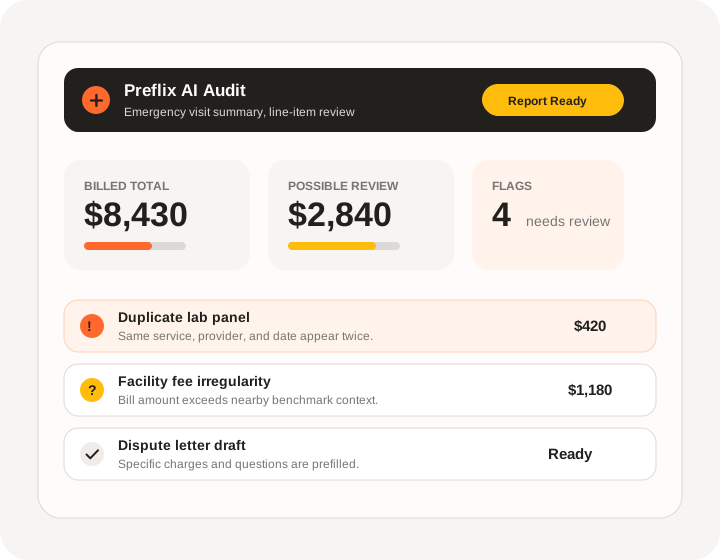
Emergency and out-of-network bills can be screened for legal-protection signals and escalation paths.
Use Cases
Preflix AI supports common medical-billing stress points: surprise bills, inpatient stays, surgery, imaging, insurance denials, and accounts in collections.
Scenarios
Each scenario has a different payer or provider pattern, but the product always starts by organizing the paper trail.
Emergency and out-of-network bills can be screened for legal-protection signals and escalation paths.
Room charges, facility fees, supplies, labs, and pharmacy line items can be organized by date and service type.
Procedure, anesthesia, pathology, facility, and assistant-surgeon charges can be compared for duplicate or bundled signals.
Common overcharges include duplicate imaging reads, repeated labs, and mismatched CPT or HCPCS context.
EOB language can be translated into a concise appeal plan with the missing evidence called out.
Bills in collections can be sorted into validation requests, charity-care checks, and credit-report next steps.
First Moves
Before arguing about a balance, the patient needs enough evidence to see what was actually billed and how the payer handled it.
A summary balance is not enough. Patients need quantities, dates, departments, codes, and provider names.
The bill and Explanation of Benefits should agree on allowed amounts, adjustments, denials, and patient responsibility.
Plan name, member ID, coverage period, network notes, and denial letters.
Admission, discharge, procedures, tests, provider names, and any records you already have.
Route The Case
A surprise bill may need legal-protection screening. A duplicate lab may need itemized verification. A collections case may need validation and charity-care review.
Emergency out-of-network: Check No Surprises Act signals and insurer handling.
High facility fee: Compare against published price and visit setting.
Denied claim: Identify missing authorization, coding, or documentation language.
Start With The Scenario